FREE sourcing support and up to 3% coordination support for qualified business buyers. Eligibility applies to qualified business buyers and is confirmed after we review your product, quantity, destination, and sourcing requirements.
Material applications
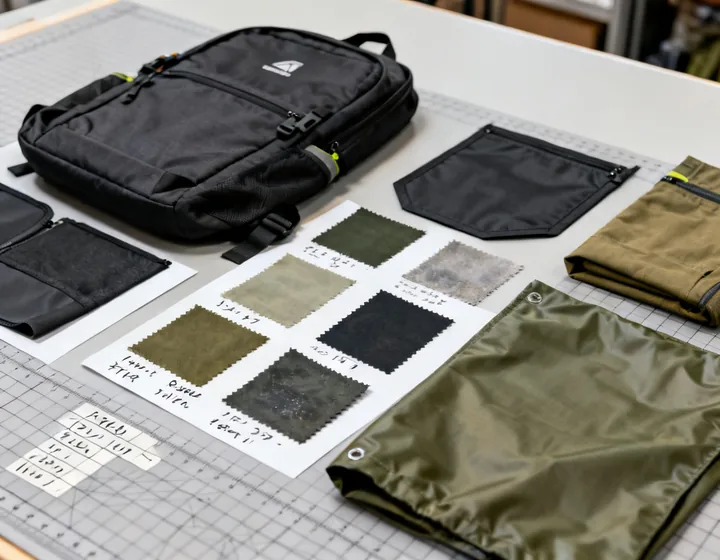
This page supports procurement planning for outdoor and performance fabrics. It does not introduce a separate measured landing keyword. Record the finished product, contact conditions, sewing process and site constraints so a mill quote can be compared without inventing equivalence to any reference brand.
Define the reference that both parties will use: retained swatch, construction note, GSM target, usable width and the exposure the finished item will see in the United States market.
State whether the textile will be a backpack body, hip-belt contact, rain cover, soft-shell panel, workwear reinforcement or an industrial cover. Note abrasion from contents, UV hours, wet-dry cycling, washing or chemical splash. A pack that sits against webbing has different stitch and coating needs than a laminated shell. If the buyer currently searches a branded nylon, write the actual duty instead of copying the brand name into every field. Keep unknowns labeled. Do not convert a catalog adjective such as waterproof into a pass/fail value until the hydrostatic or spray method is named. Site constraints such as cutting width, needle type and bonding process belong in the same brief because they change acceptable stiffness and thickness.
Name the abrasion, tear, hydrostatic, spray, MVTR or weathering method the program will use, including edition, specimen size and conditioning. Bind results to the quoted article and lot, not to a generic mill brochure. A public ASTM textile listing explains that methods exist; it does not prove the proposed fabric passed. Sample condition matters: greige, dyed, coated or laminated pieces are not interchangeable evidence. If stretch is required for mobility panels, record the stretch direction and recovery method separately from the pack-body construction. Lab dips do not replace bulk shade lots. Record reviewer, date and permitted deviation before releasing production.
Translate marker width into usable fabric width after selvedge and coating. State quantity per color and total with unit, target roll length and whether mixed shade lots are allowed on one finished SKU. Finishes such as DWR, polyurethane coating, TPU lamination or calendaring change hand, weldability and water behavior; each must be quoted as in or out of scope. Delivery stages should separate sample, pre-production and bulk so freight and lead time are not mixed. US destination, packing and roll marking affect landed comparison. Optional budget must show currency and whether it is per yard, meter, kilogram, roll or complete order. High-end, mid-range, economical or undecided is a preference about documentation and finish, not a certified mill tier.
After the application brief is stable, open inquiry families and send quantity plus destination through the requirements form.
Share end use, exposure, method basis, quantity and destination so outdoor fabric options can be compared.
Qualified business buyers may receive FREE matching and initial quote support, plus up to 3% coordination support after review. Eligibility applies to qualified business buyers and is confirmed after we review your product, quantity, destination, and sourcing requirements.